When Everything Is Changing, I Go Back to the Material
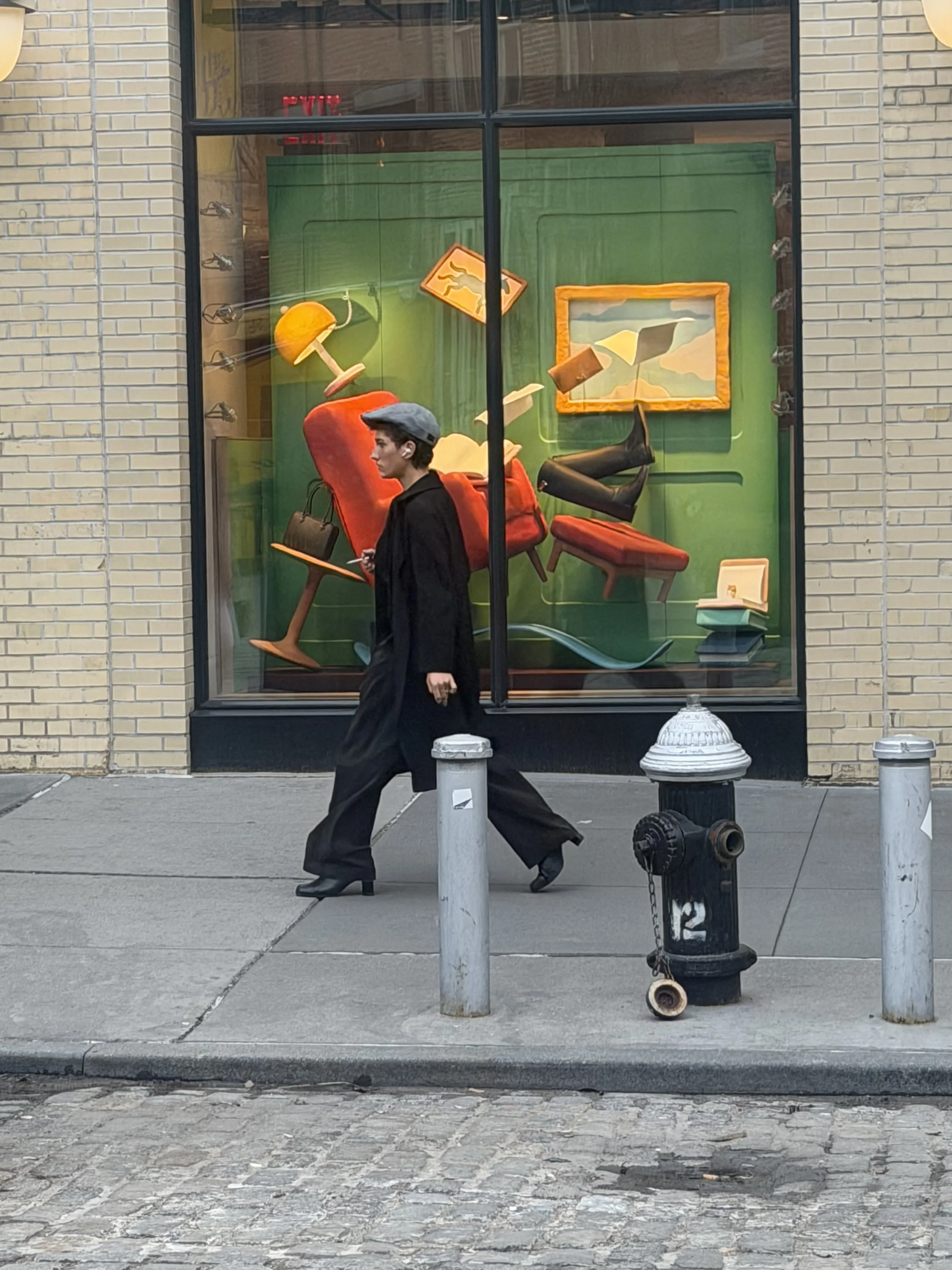
The city shows you something and doesn't wait for you to catch up.
I was walking through the city last week and stopped to photograph a stranger.
She was in all black — long coat, heels, beret — walking past a shop window. Behind the glass, furniture floated mid-air, frozen in the middle of falling. She didn't look. Just kept moving.
I kept thinking about that image. The city always does this — it shows you something and doesn't wait for you to catch up.
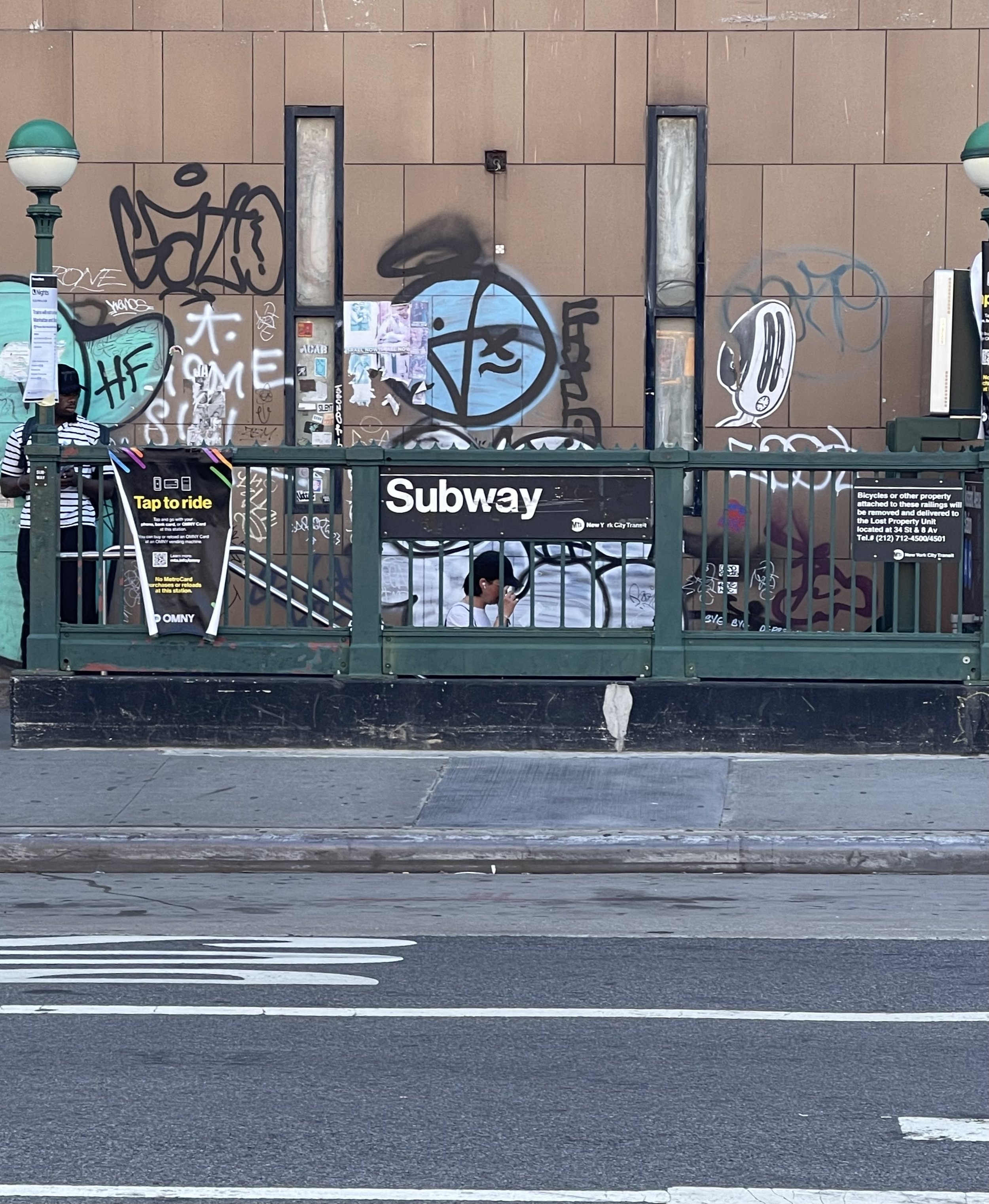
New York is a place of constant movement. Seasons flip almost without warning. People come and go. A corner you loved becomes something else entirely. You learn not to hold on too tightly to any version of it.
I've been thinking about this in relation to my own body lately. Midlife is a strange thing to navigate — especially when your whole creative practice has always been about transformation.
I've spent 17 years working with materials that change: rubber that was once liquid, fabric that was once flat, brass that oxidizes and shifts color over time without asking permission.
And now I'm the material.
My kids are tweens, which means I'm watching them become something new almost daily — a different face at breakfast than the one that came home the day before. I'm changing too, in ways that are less visible but no less disorienting.
What I keep coming back to is this: in my work, asymmetry was never a mistake. An imperfect edge, a patina that landed differently on one side — these were never things to fix. They were the piece telling the truth about how it was made.
Maybe that's the only framework I know how to use right now. For the city, for my kids, for myself.
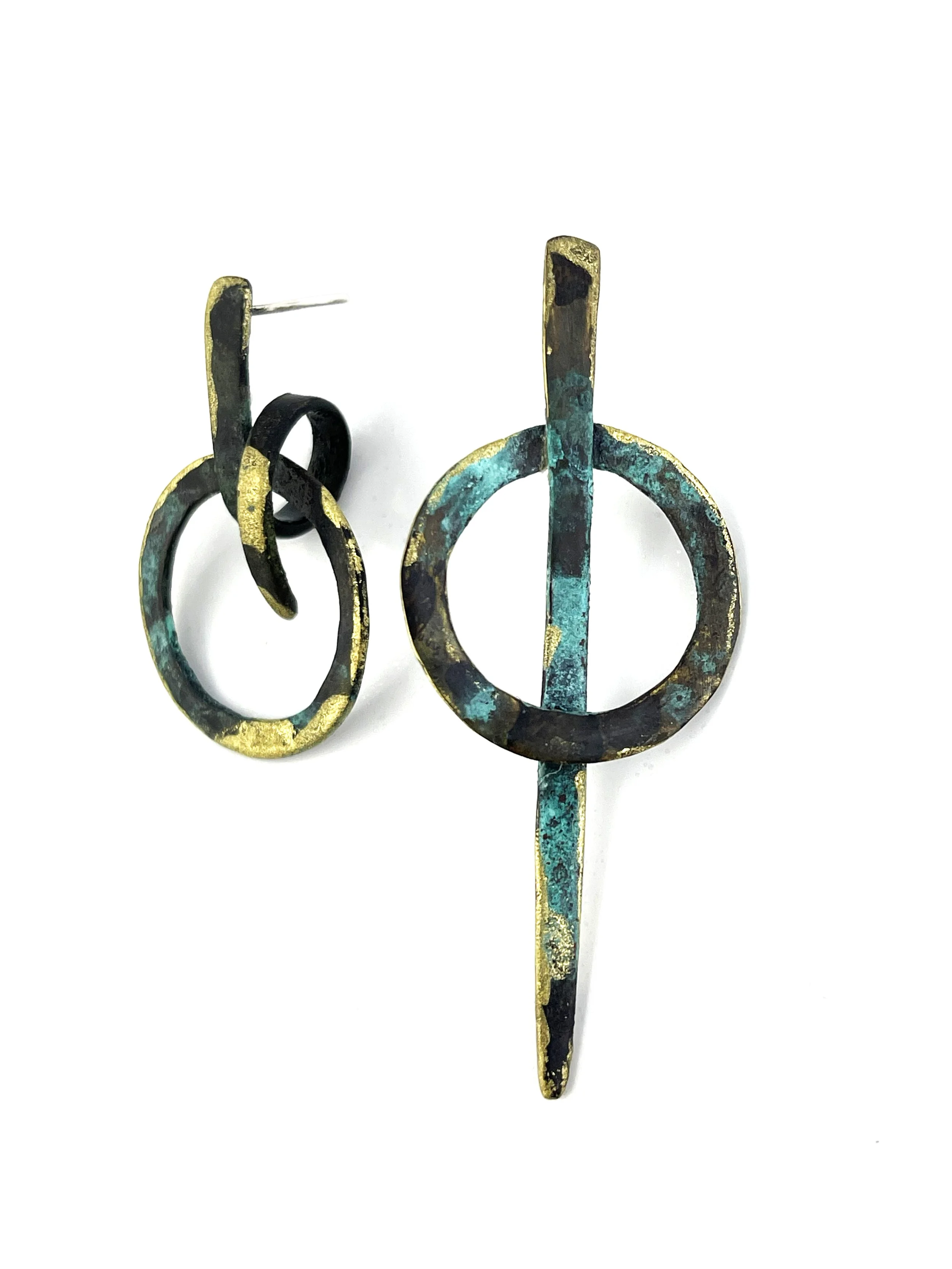
The Echo Shapes earrings I've been photographing this week feel related to all of this.
Two forms that repeat each other but not exactly — a circle and a line, assembled into something that reads differently from every angle. Oxidized brass, gold highlights. The patina is applied — but it keeps developing. Time does something to it that I can't.
Two shapes. Almost the same. Never quite.
wo shapes. Almost the same. Never quite.
About the patina
The surface on Echo Shapes isn't a coating or a paint. It's oxidation — a chemical response to heat and air that I initiate, but can't fully control. Every pair develops its own particular range of blues, greens, and golds depending on how the metal responded that day.
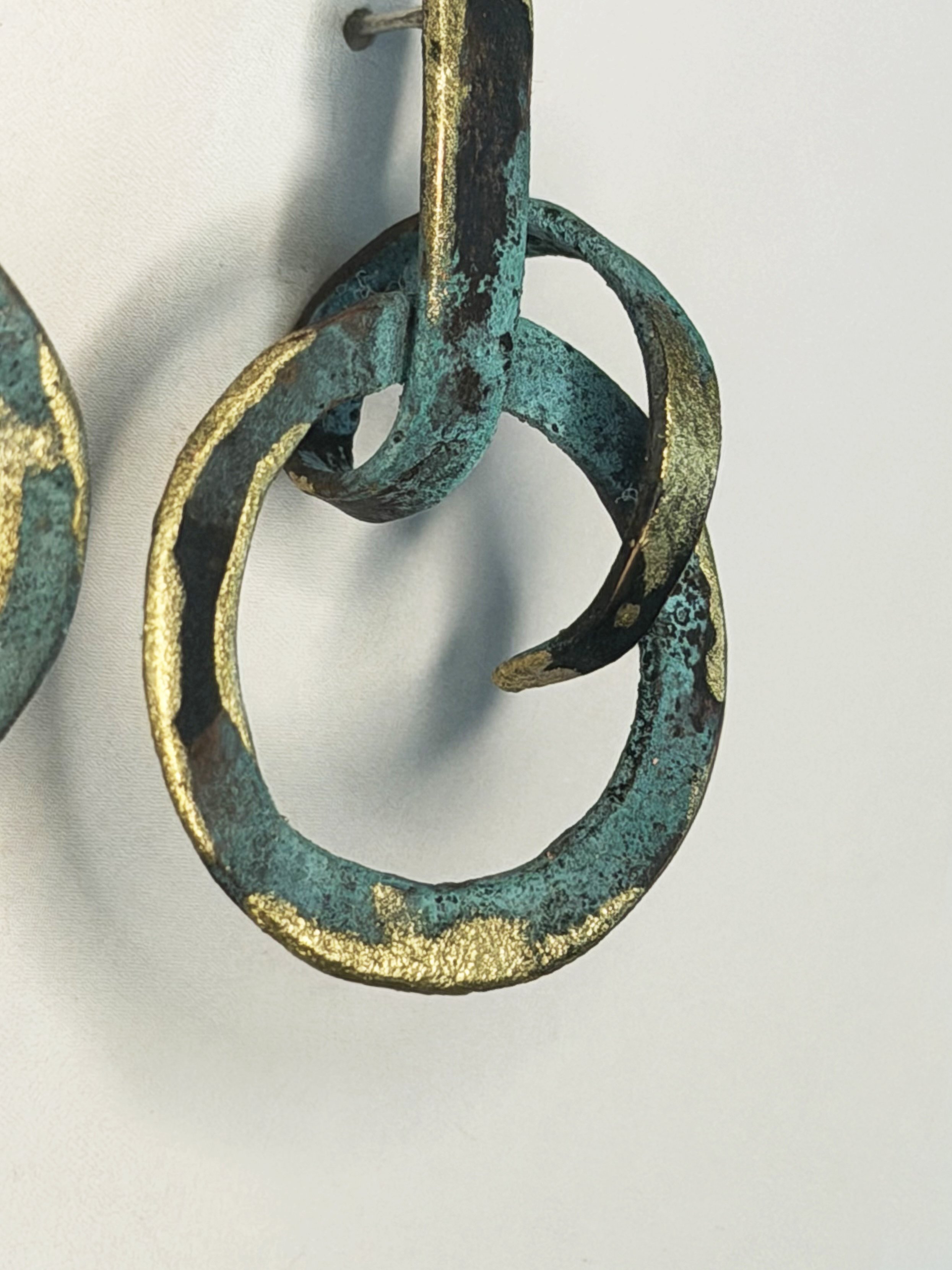
The patina develops on its own terms. No two pairs are identical.
This is the part I find most honest about working in brass. I can shape the form. I can decide the proportions. But the surface has its own opinion. What you're wearing when you put on Echo Shapes is the record of that conversation — between my hands, the metal, and whatever the material decided to do on its own.
That's what the New Metal line is built on. Not perfection. The opposite.
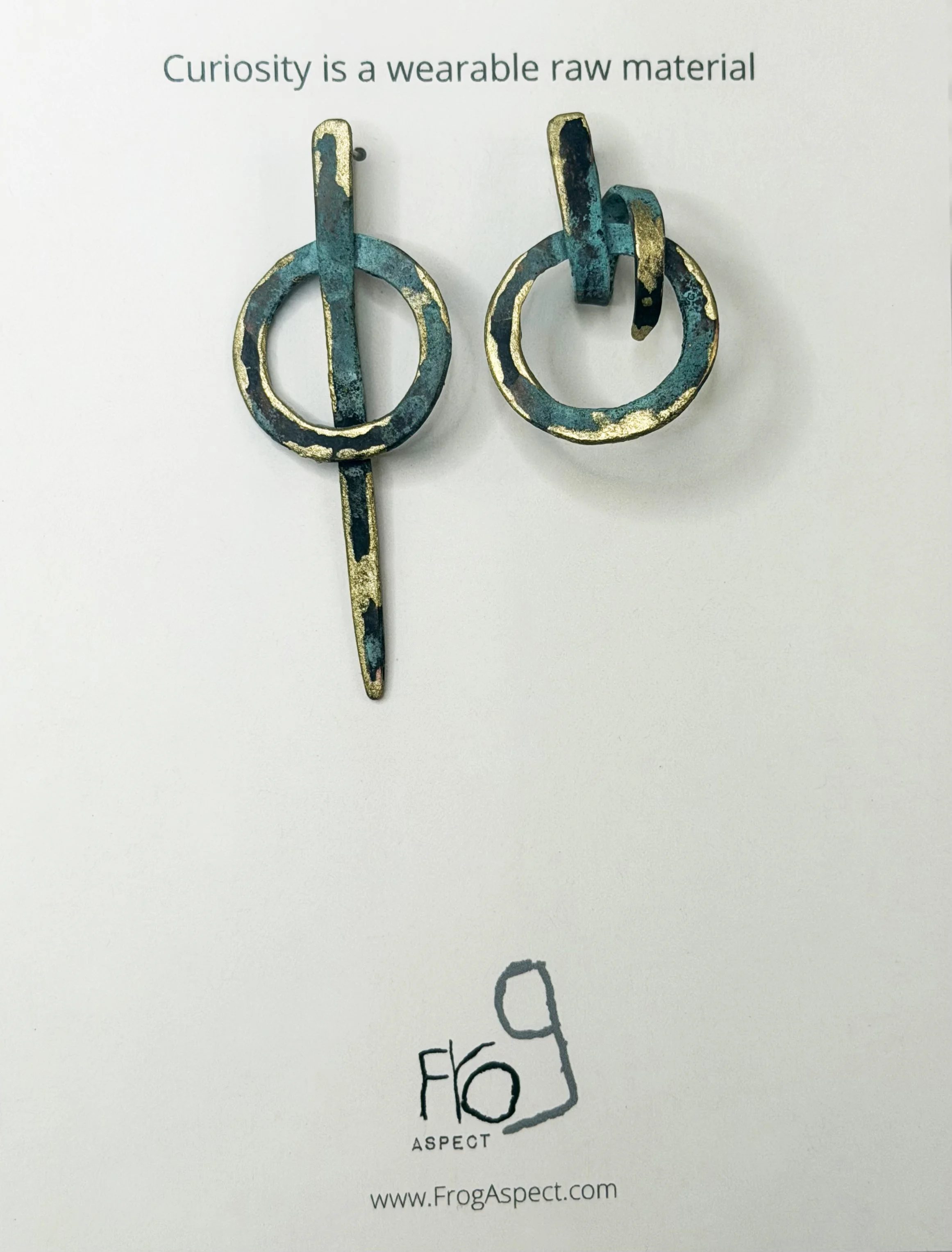
If this speaks to you, Echo Shapes is available now in the New Metal section of the shop. Each pair is one of a kind — the patina means no two are exactly alike.
Einat Cohen is the founder and maker behind Frog Aspect, a Brooklyn-based sculptural art jewelry studio founded in 2008. Working with brass, fabric, rubber, resin, and Tyvek paper, each piece begins as a question about what a material can become. The work has been shown at CraftBoston, Milano Jewelry Week, and Cluster Jewellery London.