Why I Make Jewelry from Fabric, Rubber, and Resin (And Now Metal)
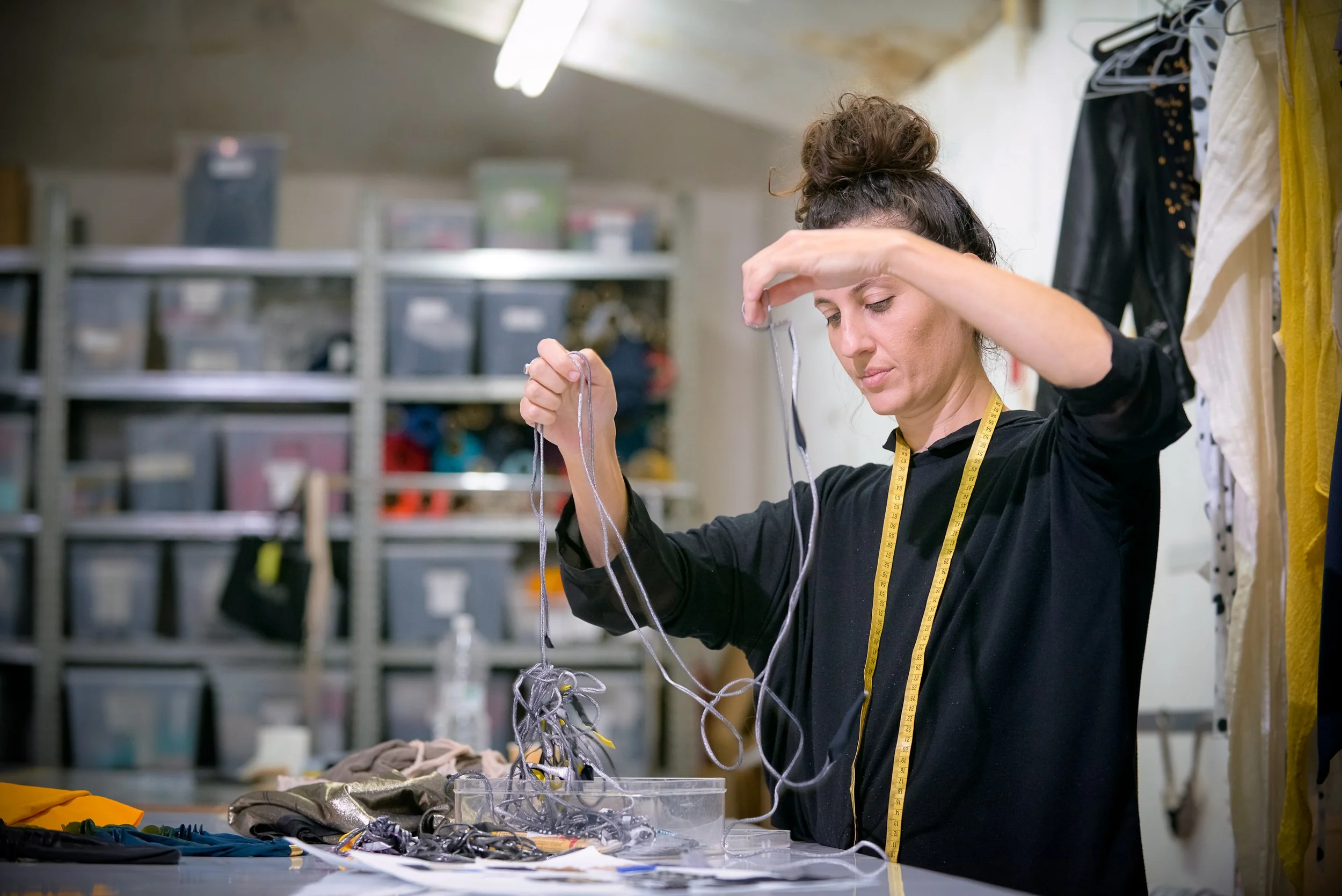
Einat Cohen in her studio, early days of Frog Aspect.
I didn't set out to make jewelry.
I studied multi-disciplinary design in Tel Aviv — costume design for the performance arts, specifically — and what I was really studying was transformation. How materials change. How a body in costume becomes something else. How form and movement create meaning.
I grew up in Jerusalem, moved to Tel Aviv, and eventually landed in Brooklyn. Along the way I founded Frog Aspect in 2008, and the name tells you everything about how I think about the work.
Frogs fascinate me because of metamorphosis — the way they move between forms, adapt to radically different conditions, become something entirely new without losing what they essentially are. That's what I'm doing with materials. And, I think, what the jewelry does for the people who wear it.
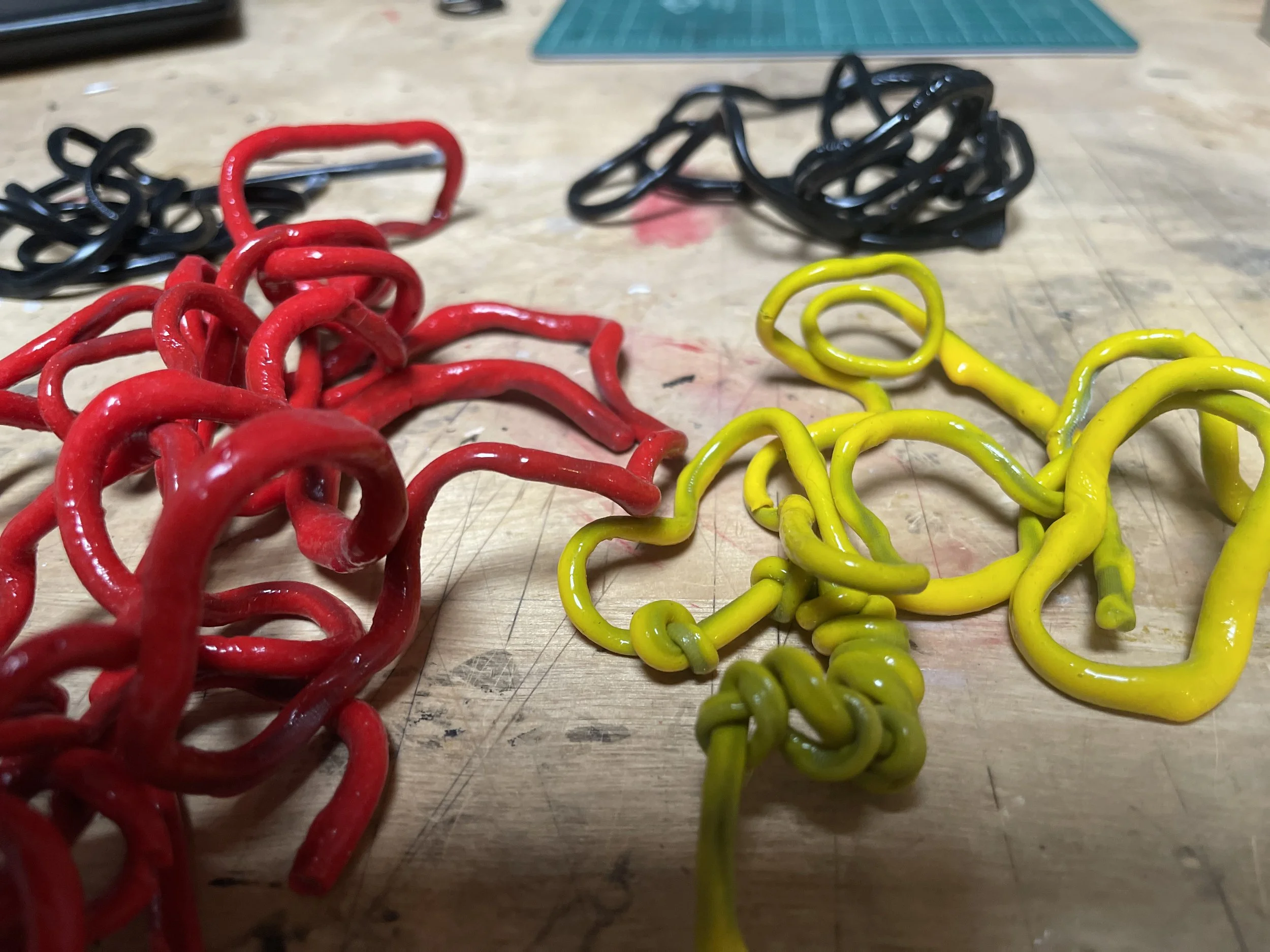
Spandex cord, coated in rubber. Before it becomes something else
The philosophy behind the work
My work is grounded in two ideas that I keep coming back to: natural metamorphosis, and wabi-sabi — the Japanese concept of finding beauty in imperfection, impermanence, and irregularity.
Rust. Frayed edges. Asymmetrical forms. Visible construction marks. These aren't flaws in my work — they're part of the story. I'm not trying to make things that look perfect. I'm trying to make things that look true.
This means I work differently than most jewelry makers. I don't start with a finished design and execute it. I start with a material and a question, and I follow where it leads.
Why unconventional materials?
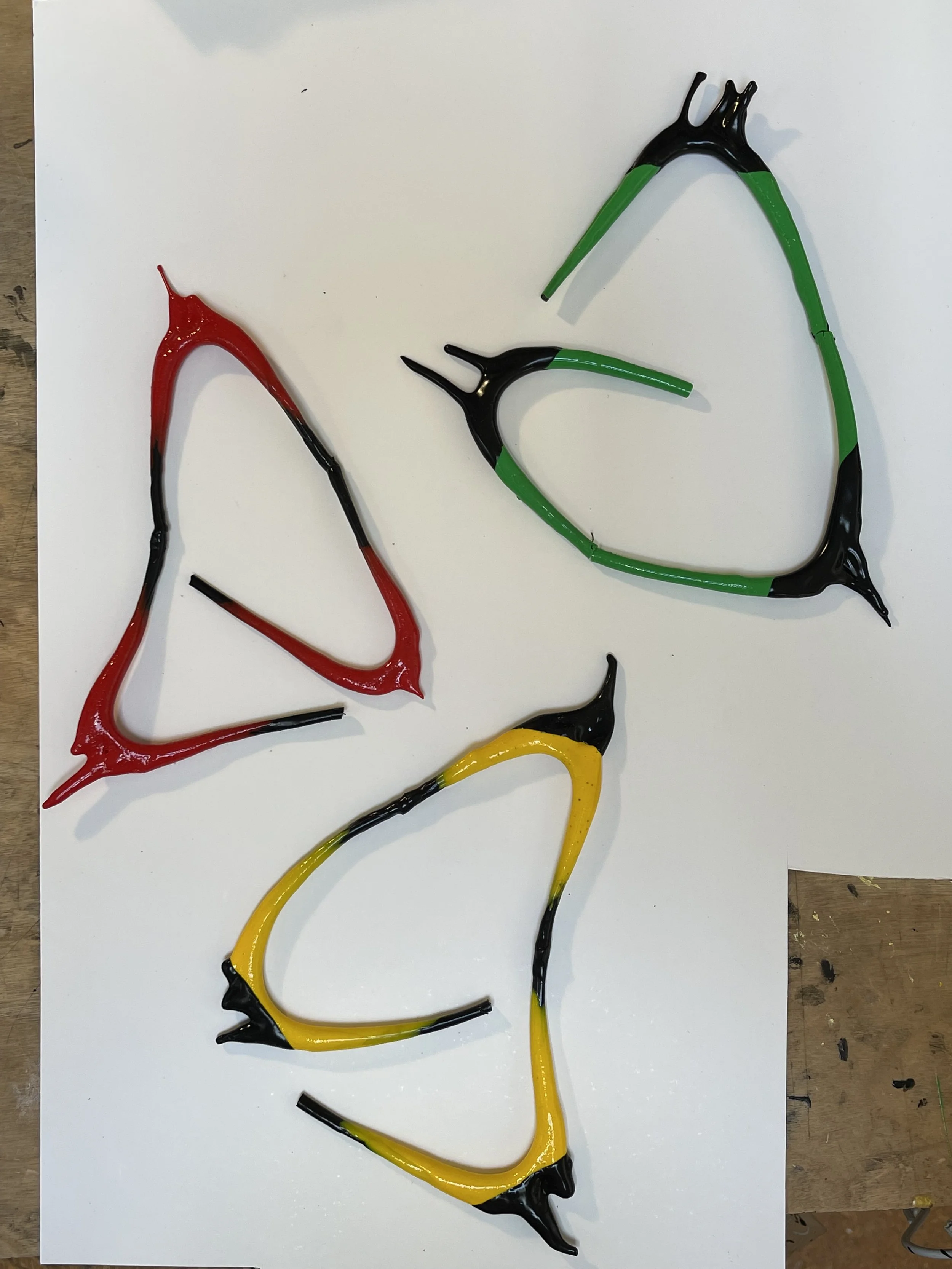
Rubber and spandex forms mid-process — watching how the material moves before deciding what comes next.
I'm drawn to materials that aren't supposed to be beautiful. Industrial things. Overlooked things. Spandex, Tyvek paper, rubber, metal. Materials that have texture and personality and history that precious metals don't.
I begin each piece by experimenting — testing a material's physical limits through stretching, folding, burning, bonding. I'm not fighting the material. I'm in conversation with it, trying to find out what it wants to become. The imperfections are part of it. Changeability is part of it. Those aren't problems to solve — they're the whole point.
Rubber has a weight and darkness I find compelling. What draws me to it most is the transformation from liquid to solid — the process in between creates forms I couldn't design intentionally. I'm working with the material at its most unstable, and what emerges from that instability is often more interesting than anything I could have planned.
Fabric is about softness and drape and movement. A fabric necklace moves when you move — it responds to your body in a way that metal can't. There's something alive about it.
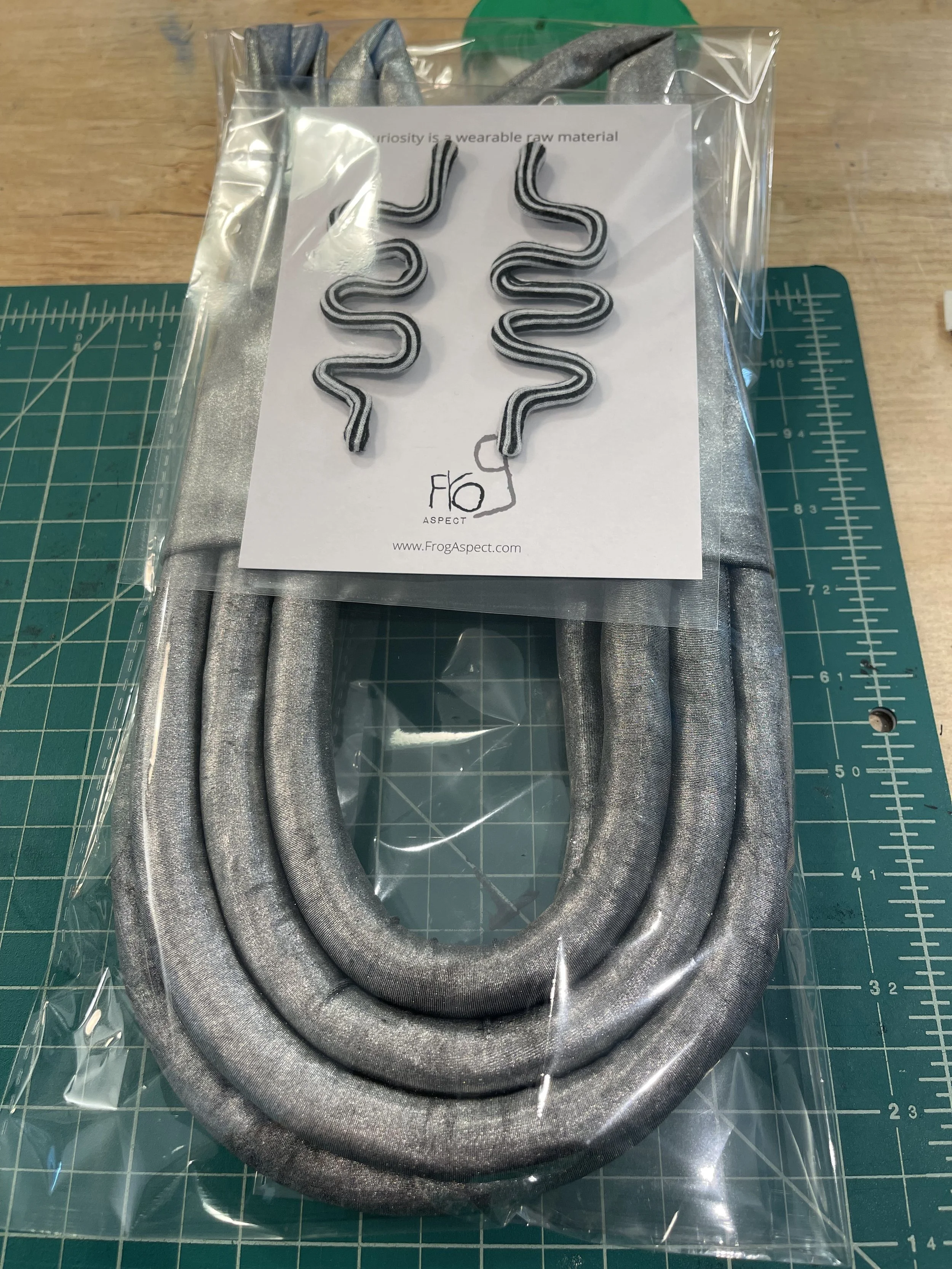
A metallic fabric necklace and squiggle earrings, packaged and ready.
Resin gives me transparency, color, and a frozen quality — like catching a moment in amber. I can build layers into it, create depth you can look into rather than just at.
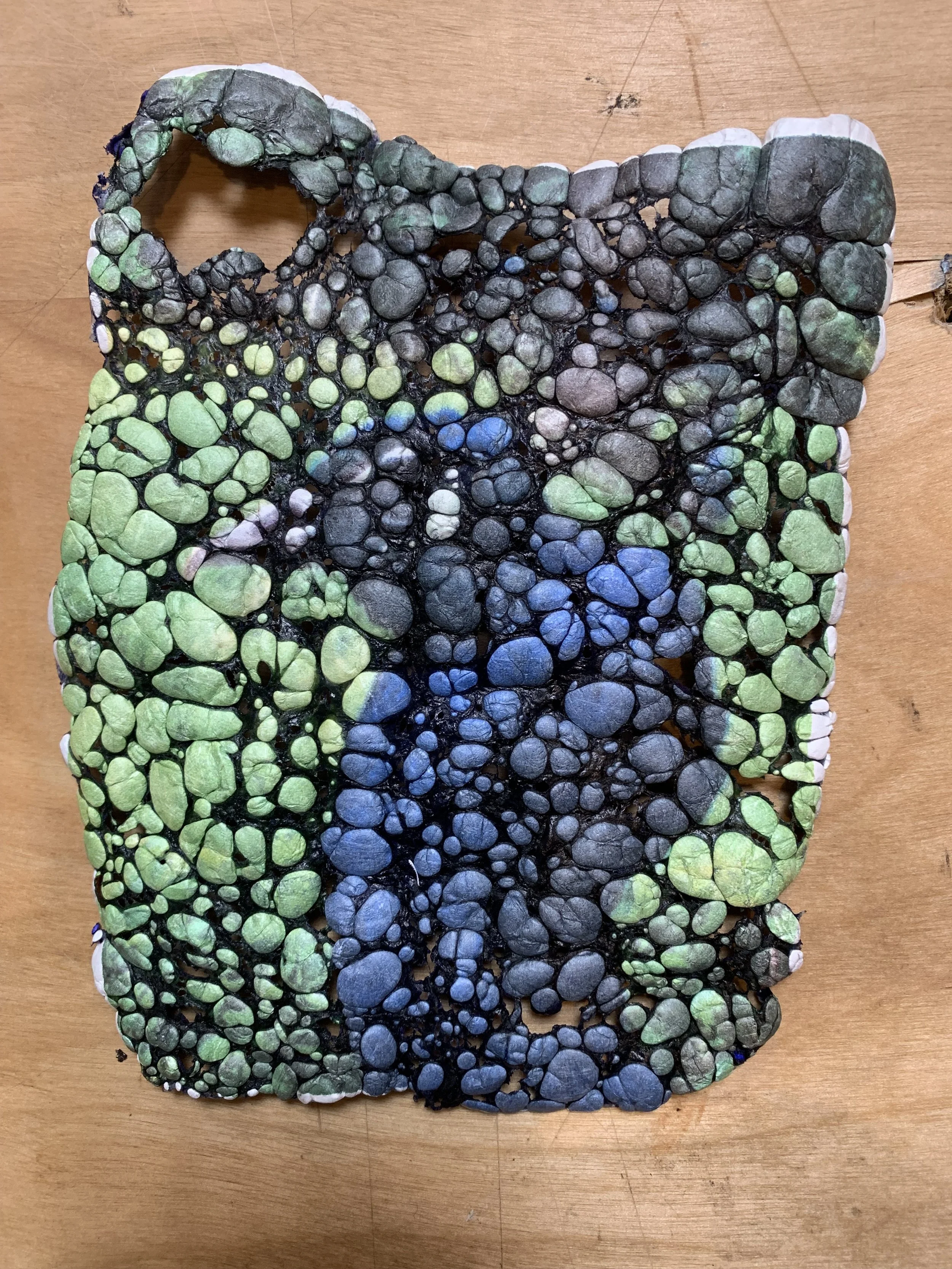
Tyvek after heat — the bubble effect. First stage.
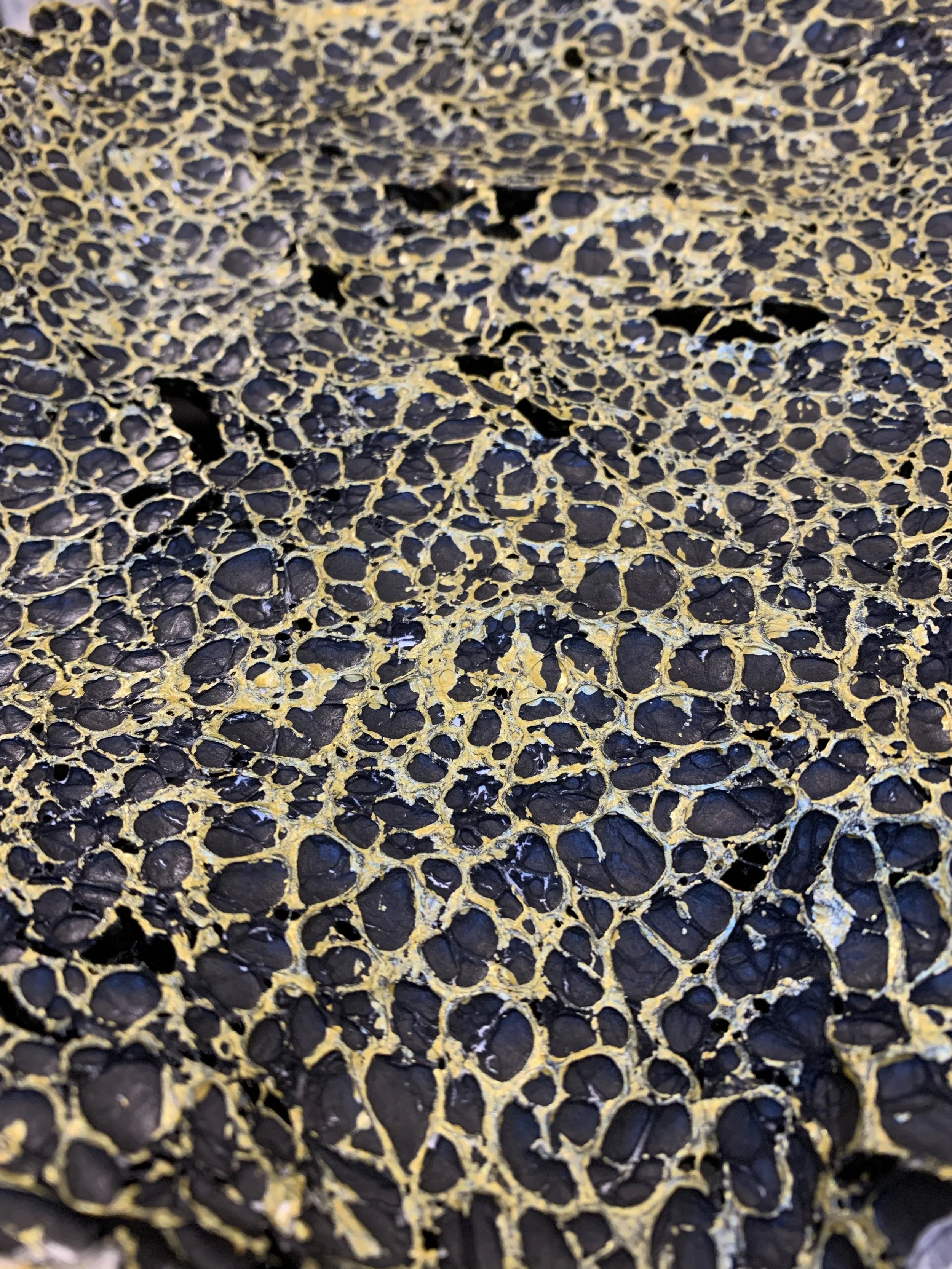
The other side of the same material -The cubic effect. Different surface, same heat.
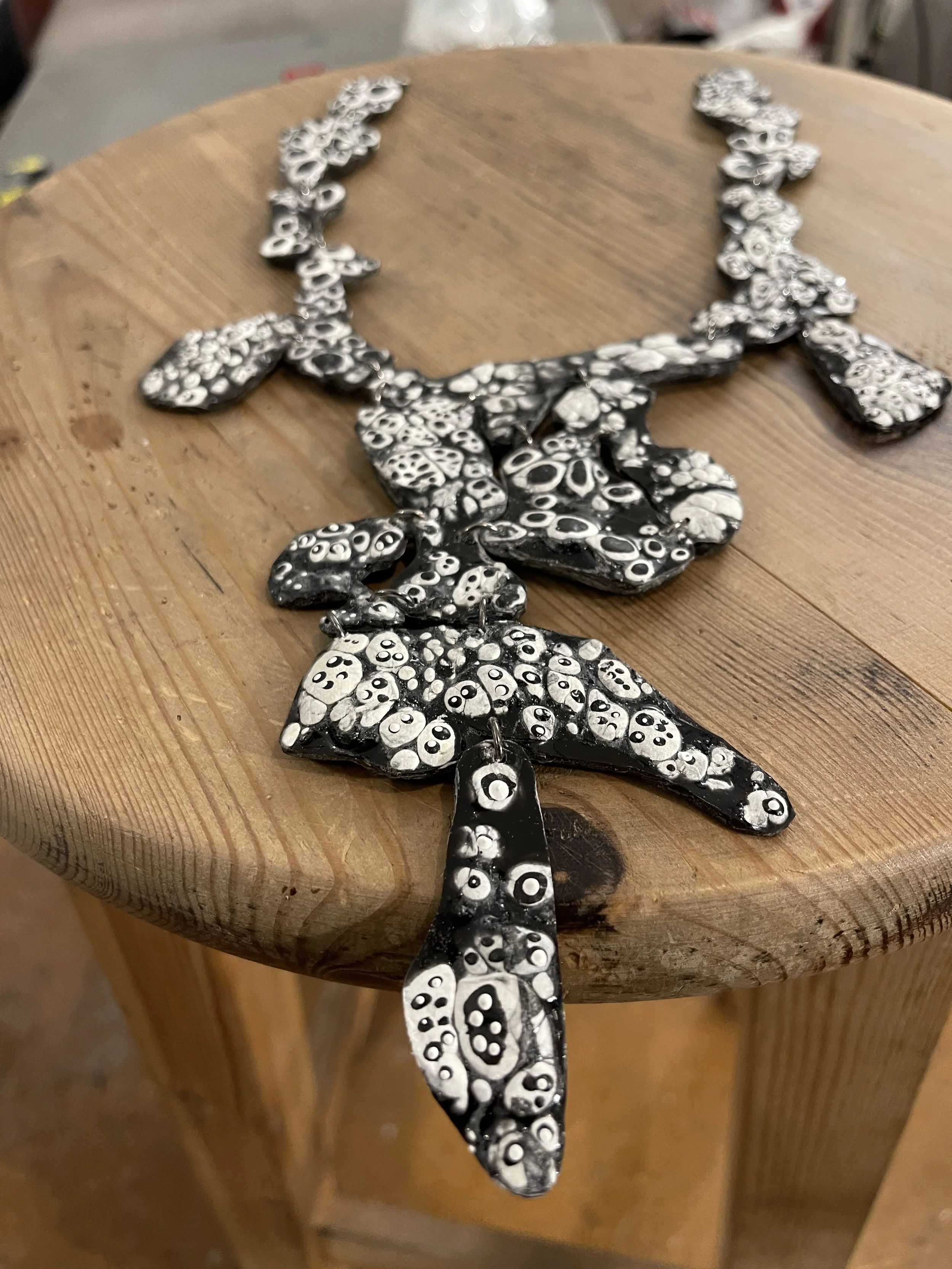
What the bubble becomes.
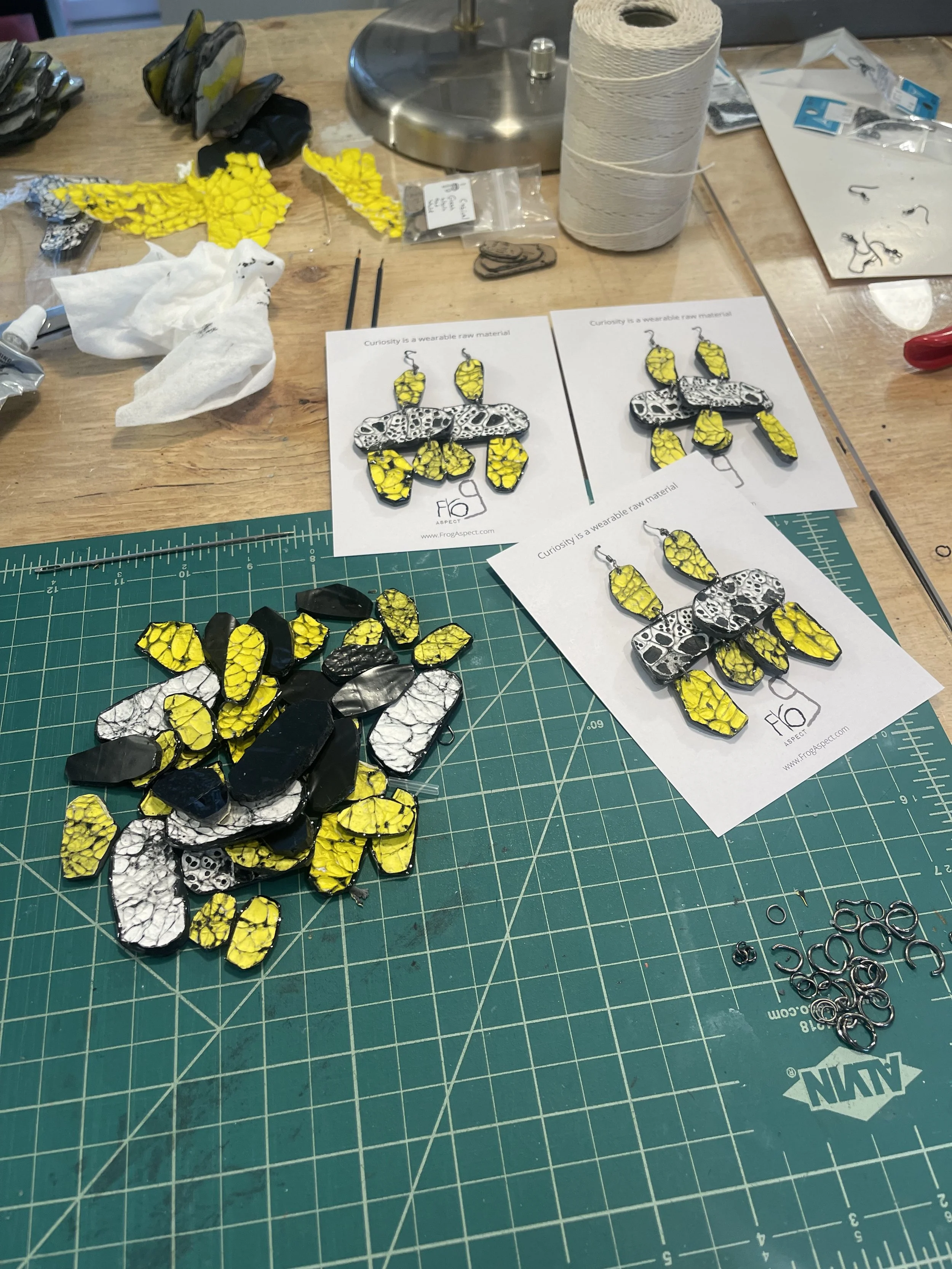
What the cube becomes.
What I've also discovered over the years is that combining materials creates something neither could be alone. When two unexpected elements meet — fabric and rubber, resin and Tyvek paper, fabric with metal — the result is often more surprising and more beautiful than anything I could have arrived at by working with one material in isolation. The combination itself becomes the material.
My early collections started with hand-knotted scarves made from fabric scraps — theatrical, expressive, rooted in my costume design background. Over time the work evolved toward jewelry proper. Each new material opened up something I couldn't do with the last one.
The process
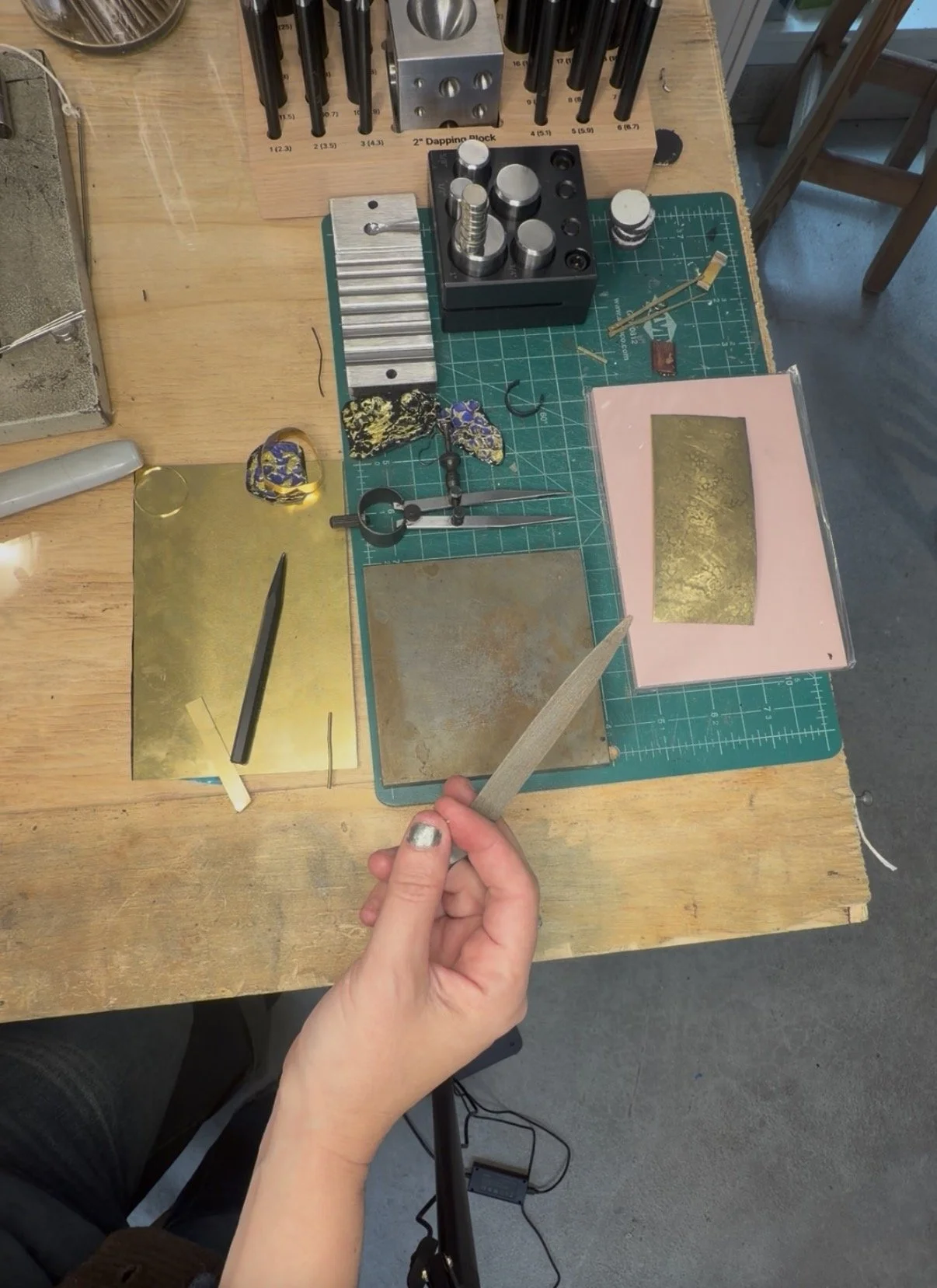
The metalsmithing bench. Brass sheet, dapping block, files.
Everything I make starts with a question. What happens if I treat this material like sculpture? What if a necklace had the presence of an architectural detail — an overhang, a cantilever, a shadow line — but you wear it?
I sketch sometimes. More often I work directly with the material, following where it leads. A piece might go through three or four versions before I get it right. The Ombré Falls earrings — hand-painted copper chain in a silver-to-blue gradient — took three attempts to get the color transition exactly where I wanted it. The final version is the only one I'd put my name on.
That's how I work with everything. Iteratively, honestly, until the piece is what it should be.
And now metal
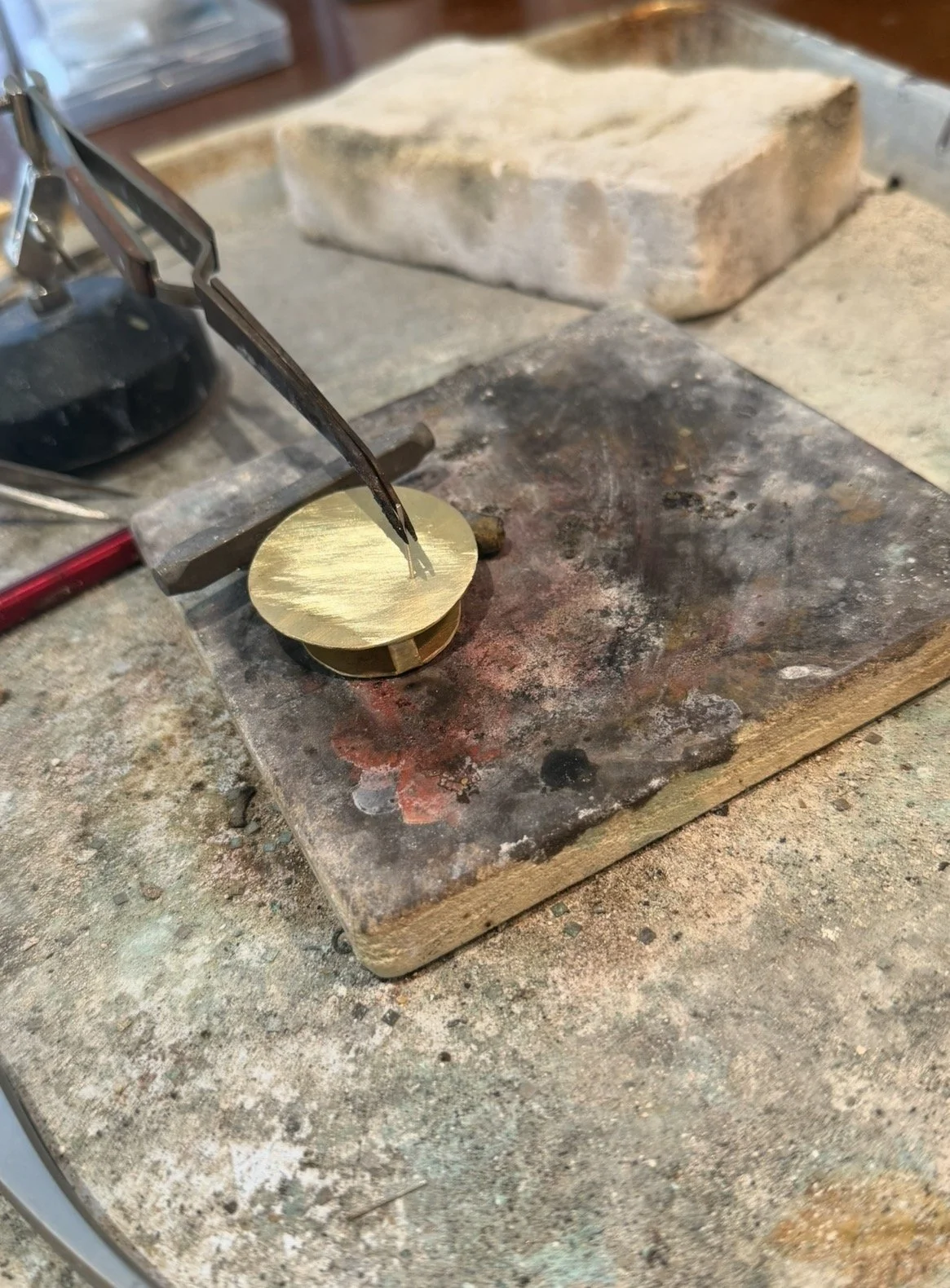
The fire brick holds the marks of every piece that came before.
Recently I've started working with brass and other metals alongside the fabric, rubber, and resin — which has opened up a whole new vocabulary of form.
Metal is unforgiving in ways that fabric isn't. It holds every mark. It remembers everything you do to it. Soldering, filing, shaping — every decision is permanent. But that's also what I love about it. There's a commitment to metalwork that forces a different kind of clarity.
What I'm exploring now is the intersection of the two worlds — hard edges meeting soft materials, architectural form meeting organic texture. A brass piece with the presence of a building detail, something that casts a shadow back onto itself. The wabi-sabi sensibility translates into metal differently than it does into fabric, but it's still there — in the visible joins, the hand-filed edges, the asymmetry that's intentional rather than accidental.
It's early. But it feels like the most exciting direction I've taken yet.
What this means for the jewelry
Frog Aspect has always been about one idea: that jewelry doesn't have to be precious to be valuable. That the most interesting pieces come from unexpected places. That what you wear can be a genuine expression of how you think and see the world.
The work has been shown at Lincoln Center, Craft Boston, Milano Jewelry Week, and Cluster Jewelry London , Curate New York — and it continues to evolve. But what matters most to me is that it ends up with people who connect with it. Who dress with intention. For whom the details matter.
If that's you, I think you'll find something here.
The shop is at frogaspect.com — the Start Here section is a good place to begin if you're new to the work. It has pieces across materials and price points.
And if you want to follow along as things evolve, you can join the list here.